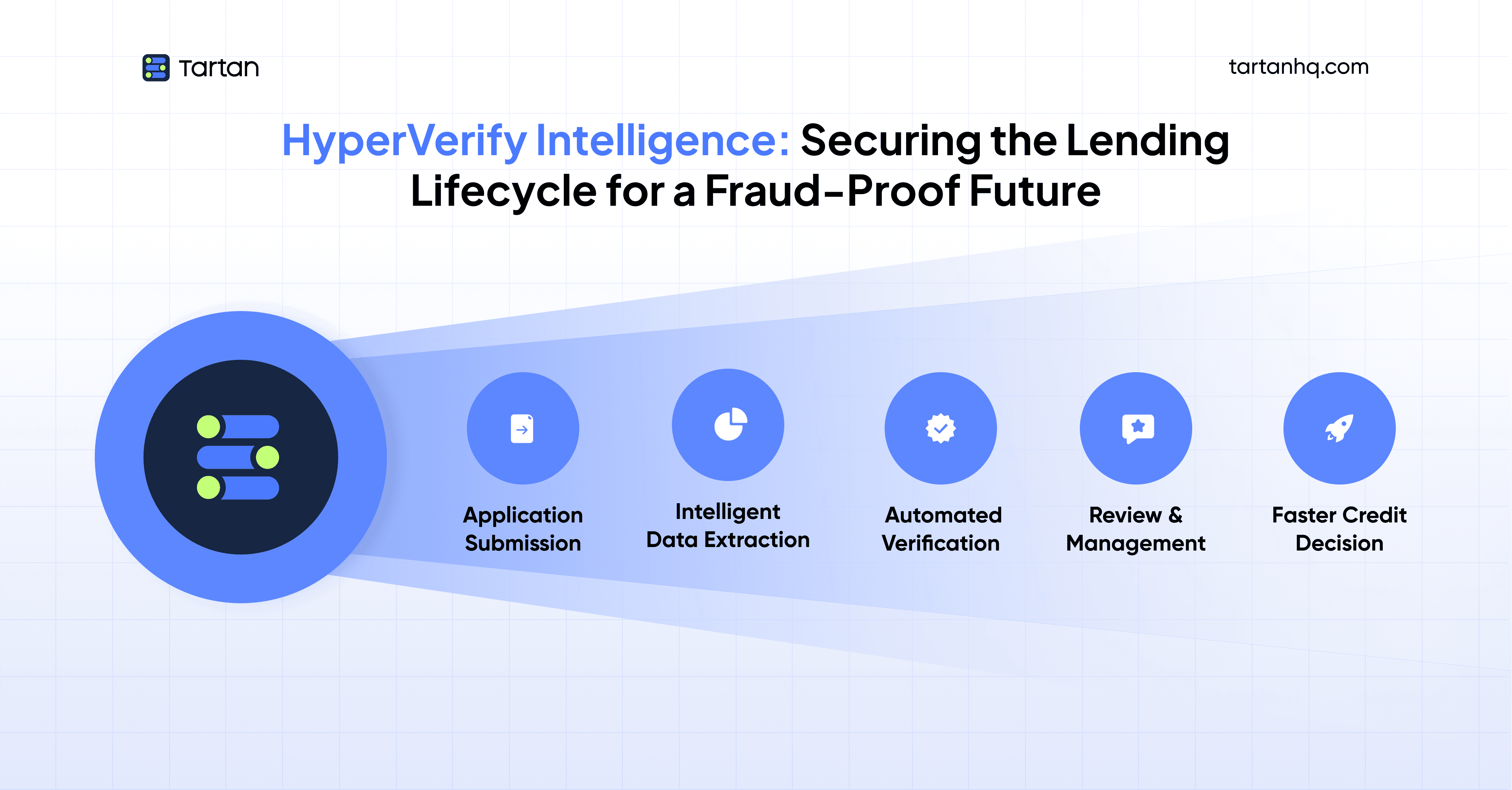
The lending industry has a problem: loan origination systems that should be speeding up approvals are actually creating bottlenecks. While banks and financial institutions have invested heavily in digital LOS platforms, the verification process - the critical step of confirming applicant information - remains frustratingly slow and manual. This is where intelligent verification systems like HyperVerify are changing the game.
The Verification Bottleneck in Traditional LOS
Modern loan origination systems excel at digitizing applications and routing workflows, but they often stumble when it comes to verification. Think about what typically happens: an applicant submits their loan application through a sleek digital interface, and then... they wait. Days or even weeks can pass as loan officers manually verify employment history, income statements, bank records, and identity documents.
This verification lag isn't just annoying - it's expensive. Every day a loan application sits in verification limbo costs lenders money in operational overhead and risks losing the customer to competitors who can move faster. For borrowers, especially in time-sensitive situations like home purchases, delays can mean losing their dream property or missing favorable market conditions.
What Makes Verification So Time-Consuming?
The traditional verification process involves several pain points that even sophisticated LOS platforms struggle to address:
Manual employer contacts that require phone calls, emails, and waiting for third-party responses to verify income
Document review marathons where loan officers manually examine dozens of pages of bank statements and financial records
Identity verification complexity involving cross-referencing across multiple databases and government systems
Asset verification challenges requiring confirmation from various financial institutions, each with different response times
Error-prone data entry where human transcription mistakes create cascading delays and compliance risks
Each of these steps requires human judgment, creates opportunities for error, and introduces delays. A simple discrepancy - like a middle name spelled differently across documents - can trigger a cascade of additional verification steps. Multiply this across hundreds or thousands of loan applications, and you can see why verification becomes the slowest part of the origination process.
Traditional vs. Intelligent Verification: A Side-by-Side Comparison
Verification Aspect | Traditional Manual Process | HyperVerify Intelligent Automation |
Processing Time | 3-7 days for standard cases, 10-14 days for complex applications | Minutes for standard cases, 2-3 days for complex applications |
Document Analysis | Manual review, prone to fatigue-related errors | Automated extraction and validation with AI-powered accuracy |
Fraud Detection | Limited to reviewer experience and random sampling | Cross-references multiple data sources and pattern recognition across thousands of cases |
Operating Hours | Business hours only (8-10 hours/day) | 24/7 continuous processing |
Consistency | Varies by reviewer skill and workload | Uniform standards applied to every application |
Cost per Application | $50-150 in labor costs | $5-15 in processing costs |
Data Security | Documents stored in multiple systems | No data storage - process and return results immediately |
Scalability | Requires proportional headcount increase | Handles volume spikes without additional resources |
Enter HyperVerify: Automation Meets Intelligence
HyperVerify represents a fundamental rethinking of how verification fits into the loan origination workflow. Rather than treating verification as a separate, manual step that happens after application intake, it integrates intelligent, automated verification directly into the LOS pipeline.
The system uses advanced document processing to instantly extract and validate information from uploaded documents.
When an applicant submits a pay stub or bank statement, HyperVerify doesn't store it - it processes it in real-time, extracts the relevant information, validates it against expected patterns and external data sources, and returns the verified results to your LOS.
This happens in seconds rather than days, and because HyperVerify doesn't retain document data, it minimizes your security footprint and compliance burden.
What's particularly powerful is how HyperVerify handles the nuanced judgment calls that previously required human review. Using sophisticated algorithms, it can detect document tampering, identify inconsistencies across multiple data sources, and flag genuine anomalies that need human attention while automatically clearing straightforward cases.
The Speed Advantage
The impact on processing time is dramatic. Where traditional verification might take three to seven business days for a straightforward case, HyperVerify can complete the same verification in minutes.
For complex applications that might normally take two weeks, intelligent verification can cut that timeline to a few days by handling all the routine checks automatically and presenting loan officers with only the exceptions that truly need their expertise.
This speed doesn't come at the cost of accuracy. In fact, automated verification often catches discrepancies that human reviewers might miss, especially in high-volume environments where fatigue becomes a factor. The system never gets tired, never overlooks details, and applies the same rigorous standards to every application.
Beyond Speed: Better Customer Experience
Fast verification translates directly into better customer experience. Key benefits include:
Instant feedback on application status rather than days of silence and uncertainty
Immediate issue identification so borrowers know what additional information is needed right away, not days into the process
Real-time progress tracking that lets applicants see verification milestones being cleared automatically
Reduced application abandonment because the process maintains momentum instead of stalling during verification
Fewer support inquiries since borrowers aren't left wondering about their application status
This transparency builds trust and reduces applicant anxiety. For lenders, this means fewer "where's my application?" calls and higher customer satisfaction scores.
Risk Management That Actually Works
One of the surprising benefits of automated verification is improved risk management. HyperVerify systems can cross-reference applicant information against a much broader set of data sources than any human reviewer could practically check. They can identify patterns across thousands of applications that might indicate fraud or elevated risk.
When a verification system processes thousands of applications, it develops a sophisticated understanding of what "normal" looks like across different borrower profiles and loan types. Deviations from these patterns trigger alerts, but unlike simple rule-based systems, intelligent verification can distinguish between suspicious anomalies and benign variations.
Integration: The Make-or-Break Factor
The real power of HyperVerify emerges when it's properly integrated with your existing LOS. A verification system that operates as a separate silo just creates a different kind of bottleneck. True integration means verification data flows seamlessly into underwriting decisions, compliance checks populate automatically, and the entire origination pipeline moves as a unified system.
Modern LOS platforms are increasingly built with APIs and integration points that make this kind of deep connection possible. HyperVerify can pull application data automatically, perform its verification magic, and push verified results back into the LOS decision engine without any manual handoffs.
The Bottom Line for Lenders
For financial institutions struggling with loan processing backlogs, verification automation offers a clear path to improvement. The business case is straightforward:
Operational efficiency: Faster processing means higher throughput without increasing headcount
Competitive advantage: Better customer experience translates to improved conversion rates and retention
Risk reduction: Stronger verification reduces default risk and regulatory exposure
Cost savings: Dramatic reduction in per-application processing costs
Scalability: Handle seasonal spikes and growth without proportional staff increases
The initial investment in implementing a system like HyperVerify typically pays for itself within months through operational savings alone. When you factor in the competitive advantage of being able to approve loans in hours instead of days, the ROI becomes even more compelling.
Looking Ahead
As lending continues its digital transformation, the gap between institutions with intelligent verification and those still relying on manual processes will only widen. Borrowers increasingly expect Amazon-like speed and transparency, even for complex financial products like mortgages and business loans.
HyperVerify and similar verification automation platforms aren't just nice-to-have enhancements - they're becoming essential infrastructure for any lender who wants to compete effectively in the modern market. The question isn't whether to automate verification, but how quickly you can implement it before your competitors gain an insurmountable advantage.
The loan origination systems of tomorrow won't just digitize the old process - they'll reimagine it entirely around intelligent, automated verification that makes the whole pipeline faster, more accurate, and more customer-friendly. That future is already here for institutions smart enough to embrace it.